Paris Masters: Complete Guide to the ATP Masters 1000 in Paris
The Paris Masters is one of the most prestigious indoor tournaments on the ATP Tour and the final Masters 1000 event of the season. Played on indoor hard courts, it brings together the world’s leading players for one last major test before the ATP Finals, with ranking points, season-ending ambitions and the title itself on the line.
Officially known as the Rolex Paris Masters, the tournament has a distinctive place on the calendar. While many Masters 1000 events are played outdoors, Paris rewards precision, aggressive returning and the ability to perform under pressure in fast indoor conditions. Its position at the end of the season also makes it one of the most consequential tournaments of the year.
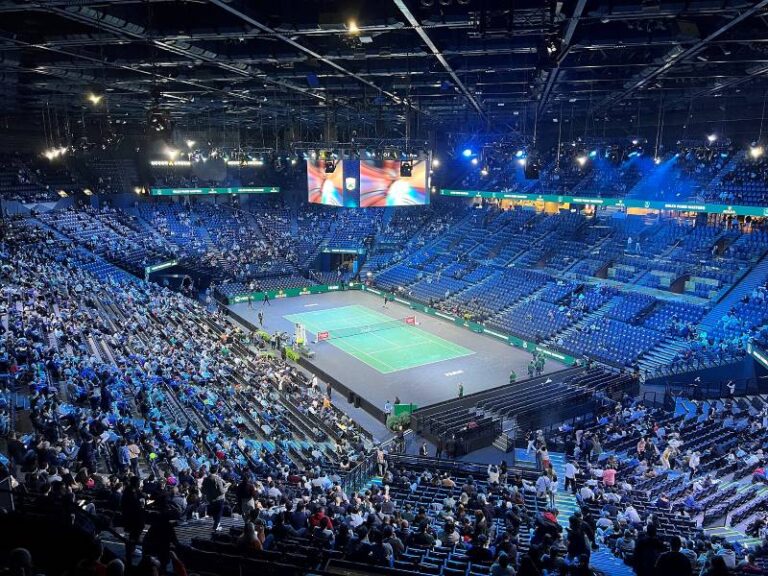

Paris Masters at a Glance
Official name: Rolex Paris Masters;
Location: Paris area, France;
Venue: Paris La Défense Arena, Nanterre;
Category: ATP Masters 1000;
Surface: Indoor hard court;
Singles draw: 56 players;
Doubles draw: 28 teams;
First edition as a Masters event: 1986;
Season position: Final ATP Masters 1000 tournament of the year.
The event is held in the Paris metropolitan area, at a venue that has changed over the tournament’s history. In 2025, the Paris Masters moved from the Accor Arena in central Paris to Paris La Défense Arena in Nanterre, beginning a new chapter for one of the ATP Tour’s longest-running indoor events.
History of the Paris Masters
The tournament’s history is closely connected to the development of professional tennis in France. Its origins trace back to the Paris Open in 1968, while the modern Masters event was established in 1986. Over the decades, it has become a regular destination for the biggest names in men’s tennis and an important part of the European indoor season.
The tournament has often produced dramatic finishes. Its indoor conditions can reduce the time available to react, making serve quality, return position and the ability to take the ball early particularly important. Even the leading players can struggle when opponents find their rhythm on a fast court.
Paris has also played a major role in the season-long race for the ATP Finals. As the final Masters 1000 event, it offers one of the last opportunities to earn a substantial number of ranking points before the eight-player season finale in Turin.
The tournament’s history includes champions from several generations, from Boris Becker and Marat Safin to Novak Djokovic, Daniil Medvedev, Alexander Zverev and Jannik Sinner. Its roll of honour reflects the different styles that can succeed indoors, from first-strike tennis to exceptional returning and baseline consistency.
Surface and Playing Conditions
The Paris Masters is played on indoor hard courts. Unlike outdoor tournaments, indoor conditions remove wind and weather as major variables, allowing players to rely more consistently on their preferred patterns.
The surface places a premium on an effective serve, early ball-striking and fast transitions from defence to attack. Players who return well and take time away from their opponents can be particularly dangerous, especially against big servers who depend on short points.
Indoor tennis also rewards concentration. With fewer external variables, small differences in execution can decide tight sets and tie-breaks. That is one reason why the Paris Masters so often produces closely contested matches, even when a top seed appears to have a favourable draw.
The conditions can also favour players who have built momentum during the autumn indoor swing. Confidence, physical freshness and the ability to adapt quickly to the court can be just as important as ranking.
Tournament Format and ATP Ranking Points
The Paris Masters is an ATP Masters 1000 tournament, the second-highest tier of regular men’s tour events after the Grand Slams. The singles draw features 56 players, with the leading seeds receiving byes into the second round.
Matches are played in a knockout format. Players must win six matches to lift the singles trophy, although seeded players who receive a first-round bye need to win five.
The winner earns 1,000 ATP ranking points, making the tournament especially valuable late in the season. The points available decrease with each round reached, giving players outside the leading group a meaningful opportunity to improve their rankings and qualify for the following year’s major events.
The Paris Masters is also crucial to the ATP Finals race. Players competing for the final places in Turin may need a deep run in Paris to overtake their rivals, while those already qualified can use the event to strengthen their ranking position and finish the season on a high.
Singles competition
- 56-player main draw;
- Seven rounds;
- Best-of-three-set matches.
Other events
- Men’s doubles;
- Qualifying competition;
- Junior and exhibition activities.
Like every Masters 1000 tournament, Cincinnati regularly attracts almost all of the world’s top-ranked players.
ATP ranking points
The Cincinnati Open awards the standard ATP Masters 1000 ranking points:
- Winner: 1,000 points
- Runner-up: 650 points;
- Semi-finals: 400 points;
- Quarter-finals: 200 points;
- Round of 16: 100 points;
- Round of 32: 50 points;
- Qualifiers: 20 points.
These points often prove decisive in the Race to Turin and the battle for the ATP Rankings during the second half of the season.
Greatest Paris Masters Champions
Novak Djokovic: The Record Holder
Novak Djokovic is the most successful singles player in Paris Masters history, with seven titles. His victories came in 2009, 2013, 2014, 2015, 2019, 2021 and 2023.
His record illustrates how well his game translates to indoor hard courts. Djokovic combines an exceptional return, precise groundstrokes and outstanding defence, allowing him to neutralise powerful servers and take control of rallies. His success in Paris also reflects his ability to maintain an elite level deep into the season.
Djokovic has reached nine finals at the tournament, another record, and has repeatedly used Paris as a springboard towards the ATP Finals.
Boris Becker and Marat Safin
Boris Becker and Marat Safin each won the Paris title three times.
Becker’s victories came in 1986, 1989 and 1992. His powerful serve, attacking instincts and comfort on indoor courts made him a natural fit for the conditions.
Safin won in 2000, 2002 and 2004. At his best, the Russian combined a devastating first serve with explosive groundstrokes, making him one of the most dangerous players on fast hard courts.
Their achievements underline the tournament’s longstanding appeal to aggressive players capable of taking control of points early.
Champions of the Modern Era
The more recent roll of honour features several leading names from the modern game:
Andy Murray: champion in 2016, during the season in which he reached world No. 1.
Jack Sock: winner in 2017, one of the most surprising champions of the tournament’s modern era.
Karen Khachanov: champion in 2018, defeating Djokovic in the final.
Daniil Medvedev: winner in 2020, demonstrating his strength on indoor hard courts.
Holger Rune: champion in 2022 after defeating Djokovic in a three-set final.
Alexander Zverev: winner in 2024, defeating home favourite Ugo Humbert in the final.
Jannik Sinner: champion in 2025, beating Félix Auger-Aliassime in straight sets to win his first Paris title.
This variety of champions is part of what makes Paris compelling. The tournament rewards elite consistency, but its conditions can also allow a player in outstanding form to challenge the established hierarchy.
Paris Masters Records
The Paris Masters record book highlights Djokovic’s exceptional dominance, alongside the achievements of some of the game’s most successful indoor specialists.
Most singles titles: Novak Djokovic, 7
Most singles finals: Novak Djokovic, 9
Most recent French singles champion: Jo-Wilfried Tsonga, 2008
Youngest champion: Boris Becker, in 1986, aged 18
Oldest champion: Novak Djokovic, in 2023, aged 36
The tournament has also produced several memorable upsets. Jack Sock’s 2017 triumph remains a notable example: the American arrived in Paris outside the top tier of contenders but won the title and secured qualification for the ATP Finals.
Holger Rune’s victory in 2022 was another significant breakthrough, as he defeated Djokovic in the final after a demanding week. These results show that the final Masters 1000 of the season is not always a coronation for the highest-ranked players.
Why the Paris Masters Matters
The Paris Masters has a unique role in the ATP calendar because it combines a prestigious title with the final major points opportunity before the ATP Finals.
For the leading players, it is a chance to secure another Masters 1000 trophy and finish the regular season with momentum. For those chasing qualification in Turin, it can represent the difference between making the season finale and ending the year on the sidelines.
The tournament also provides an important test of indoor form before the ATP Finals, where the same broad conditions reward players who serve effectively, return aggressively and manage high-pressure moments.
Its late-season position gives the event a different atmosphere from the spring Masters tournaments. Fatigue and accumulated injuries can influence the field, while players who have found their best form in the autumn can take advantage of opportunities that might not have been available earlier in the year.
Paris Masters and the Road to the ATP Finals
The Paris Masters is the final Masters 1000 stop before the ATP Finals, making it a central part of the closing weeks of the men’s season.
The ATP Finals brings together the eight best-qualified singles players and doubles teams based on the season’s race standings. A strong result in Paris can dramatically improve a player’s chances of qualifying, particularly when the battle for the final positions remains close.
Even for players who have already secured their place, the tournament matters. Ranking points can influence year-end positions, while a title can provide confidence ahead of the season finale.
For fans, this creates an additional storyline beyond the draw itself: every round can affect the race to Turin, making the Paris Masters one of the most strategically important tournaments on the calendar.
Final Thoughts
The Paris Masters combines a rich history, fast indoor tennis and a pivotal place in the ATP season. Its record champion, Novak Djokovic, has set a remarkable standard with seven titles, while champions such as Becker, Safin, Murray, Medvedev, Zverev and Sinner have added their own chapters to the tournament’s story.
More than simply the last Masters 1000 of the year, Paris is a tournament where the season’s final ambitions are tested. Whether the goal is lifting a prestigious trophy, improving a ranking or securing a place at the ATP Finals, the Rolex Paris Masters consistently delivers high-stakes tennis at the end of the regular ATP season.