Roland Garros: complete guide to the French Open
Roland Garros, also known as the French Open, is the second Grand Slam of the tennis season and the most physically demanding tournament on the ATP Tour. Played every spring in Paris, it is the only Grand Slam contested on clay courts, a surface that rewards endurance, patience and tactical intelligence.
From its deep historical roots to its unique playing conditions, this guide explains everything you need to know about Roland Garros, including its surface, format, records and importance in the tennis calendar.

History of Roland Garros
The French Open was first held in 1891, making it the oldest of the four Grand Slam tournaments. Initially limited to French club members, the tournament gradually opened to international players and became a truly global event.
The Open Era began in 1968, when Roland Garros became the first Grand Slam to allow both amateur and professional players to compete. Since then, the tournament has grown into one of the most prestigious and challenging events in professional tennis.
Where is Roland Garros played?
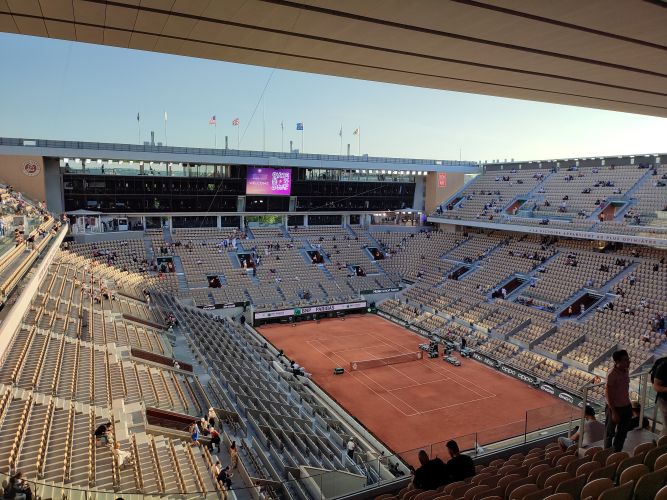
Roland Garros takes place at the Stade Roland Garros, located in the 16th arrondissement of Paris, France.
The venue includes several iconic courts, such as:
- – Court Philippe-Chatrier;
- – Court Suzanne-Lenglen;
– Court Simonne-Mathieu.
In recent years, the complex has undergone major renovations, including the addition of a retractable roof on Court Philippe-Chatrier, allowing play to continue in adverse weather conditions.
Roland Garros surface and playing conditions
Roland Garros is played on clay courts, specifically red clay, which creates unique playing conditions compared to other Grand Slams.
Key characteristics of the surface include:
- – Slow court speed;
- – High bounce;
– Longer rallies and extended matches.
Clay courts reduce the effectiveness of powerful serves and reward players with strong defensive skills, heavy topspin and exceptional stamina. Matches at Roland Garros are often decided by physical endurance and mental resilience rather than sheer power.
Tournament format and draw
Like all Grand Slam tournaments, Roland Garros features a full two-week competition with multiple events.
Singles competitions
- – 128 players in the main draw;
– Best-of-five sets for men;
– Seven rounds, from the first round to the final.
Other events
- – Women’s singles (best-of-three sets);
– Men’s and women’s doubles;
– Mixed doubles;
– Junior and wheelchair events.
Because of the clay surface, matches tend to be longer than at other Grand Slams, especially during the early rounds.
Records and legendary champions
Roland Garros has produced some of the most dominant champions in tennis history.
Most men’s singles records (after 1968)
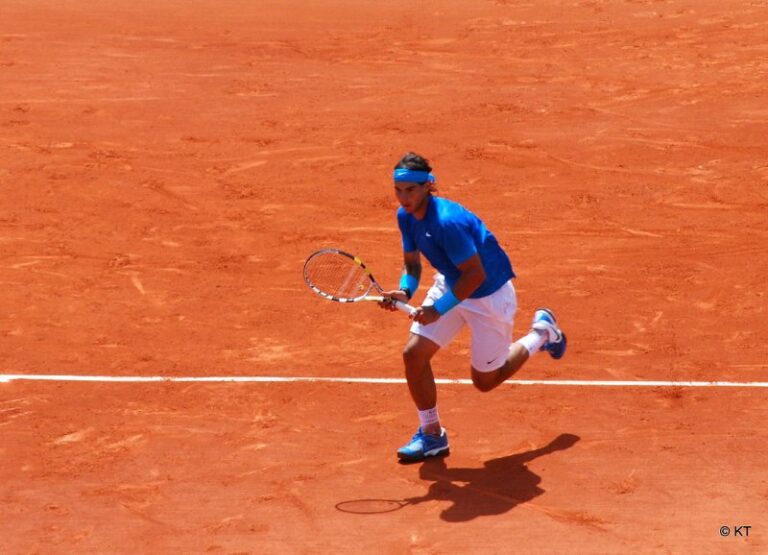
- – Most titles: Rafael Nadal (14 Roland Garros titles);
– Most consecutive titles: Rafael Nadal (5 titles from 2010 to 2014);
– Most finals appearances: Rafael Nadal (14 Roland Garros finals).
Nadal’s dominance in Paris is unparalleled in professional sports, earning him the nickname “King of Clay”.
Other notable champions
- – Björn Borg (6 Roland Garros titles in 6 finals);
– Novak Djokovic (3 Roland Garros titles in 7 finals, completing multiple career Grand Slams);
- – Ivan Lendl and Mats Wilander (3 Roland Garros titles in 4 finals).
Each era has left a distinct mark on the tournament, reinforcing Roland Garros as the ultimate test on clay.
Why Roland Garros matters so much
Roland Garros occupies a unique position at the middle of tennis season.
Strong results in Paris often:
- – Confirm a player’s clay-court dominance;
– Provide confidence heading into the grass-court season;
– Deliver crucial ranking points.
Winning Roland Garros is widely considered one of the toughest achievements in tennis due to the surface, format and physical demands.
How Roland Garros affects ATP rankings
As a Grand Slam, Roland Garros awards the maximum number of ATP ranking points:
- – Winner: 2,000 points;
– Runner-up: 1,200 points;
– Semifinalist: 720 points.
Because clay-court specialists often rely on this part of the season, performance at Roland Garros can significantly influence year-end rankings.
Roland Garros vs other Grand Slams
Compared to the other Grand Slams:
- – Slower than the Australian Open and US Open;
– More physically demanding than Wimbledon;
– Less favorable to big servers.
Its clay surface makes Roland Garros the most tactically complex Grand Slam and often the most unpredictable in terms of match duration.
The French Open in the modern era
In recent years, Roland Garros has modernized its facilities while preserving its traditional identity. Night sessions, improved infrastructure and expanded global coverage have increased its appeal without compromising its classic character.
Despite these changes, the essence of Roland Garros remains unchanged: long rallies, physical battles and relentless competition on clay surface.
Conclusion on Roland Garros
Roland Garros is more than just a Grand Slam tournament. It is the ultimate proving ground for endurance, patience and tactical excellence in tennis.
Understanding its history, surface and unique demands helps explain why lifting the trophy in Paris is considered one of the greatest accomplishments in professional tennis.