Wimbledon: complete guide to the most traditional Grand Slam
Wimbledon is the third Grand Slam of the tennis season and the most iconic tournament in the sport. Played every summer in London, it is the oldest tennis tournament in the world and the only Grand Slam still contested on grass courts.
Known for its strict traditions, elegant atmosphere and fast playing conditions, Wimbledon represents a unique challenge for players and holds a special place in tennis history.

History of Wimbledon
Wimbledon was first held in 1877, making it the oldest tennis tournament still in existence. Originally organized by the All England Lawn Tennis and Croquet Club, the event quickly became the standard by which modern tennis rules were defined.
The introduction of the Open Era in 1968 allowed professional players to compete, transforming Wimbledon into a truly global event while preserving its historical identity and traditions.
Where is Wimbledon played?
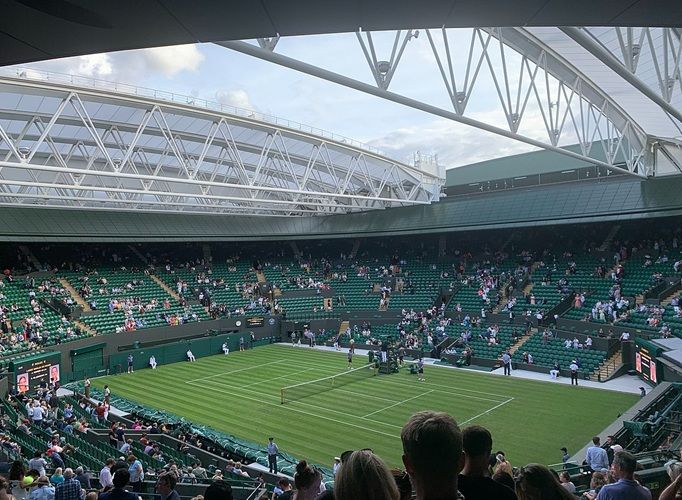
Wimbledon takes place at the All England Lawn Tennis and Croquet Club, located in southwest London, England.
The venue includes several iconic courts, such as:
- – Centre Court;
- – No. 1 Court;
– No. 2 Court.
Centre Court, with its retractable roof added in 2009, is one of the most famous sporting venues in the world and the focal point of the Wimbledon Championships.
Wimbledon surface and playing conditions
Wimbledon is played on grass courts, making it unique among the four Grand Slam tournaments.
Key characteristics of the surface include
- – Very fast court speed;
- – Low bounce;
– Shorter rallies compared to other surfaces.
Grass courts favor players with strong serves, quick reflexes and effective net play. Adaptation to the surface is crucial, as the grass wears down throughout the tournament, slightly changing playing conditions in the later rounds.
Tournament format and draw
Wimbledon follows the traditional Grand Slam format over two weeks of competition.
Singles competitions
- – 128 players in the main draw;
– Best-of-five sets for men;
– Seven rounds, from the first round to the final.
Other events
- – Women’s singles (best-of-three sets);
– Men’s and women’s doubles;
– Mixed doubles;
– Junior and wheelchair events.
Matches at Wimbledon are often shorter than at other Grand Slams due to the fast surface, although weather interruptions can affect scheduling.
Records and legendary champions
Wimbledon has produced some of the most legendary champions in tennis history.
Most men’s singles records (after 1968)
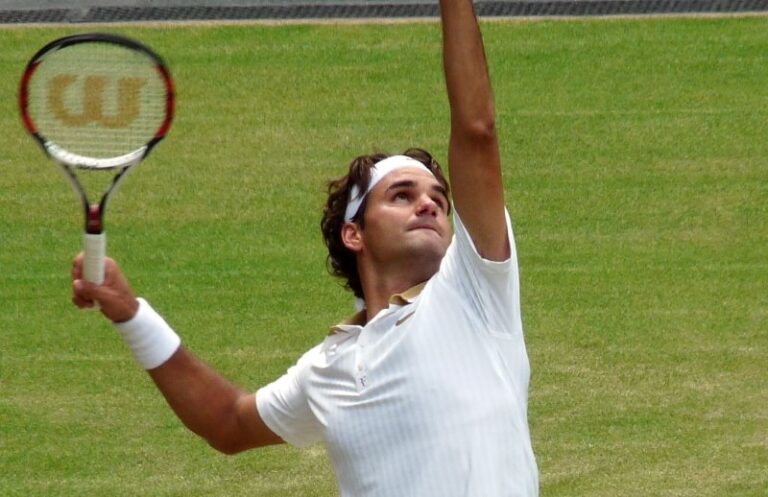
- – Most titles: Roger Federer (8 Wimbledon titles);
– Most consecutive titles: Roger Federer (5 titles from 2003 to 2007);
– Most finals appearances: Roger Federer (12 Wimbledon finals).
Federer’s dominance on grass has earned him a reputation as one of the greatest grass-court players of all time.
Other notable champions
- – Novak Djokovic (7 Wimbledon titles in 10 finals);
– Pete Sampras (7 Wimbledon titles in 7 finals);
- – Björn Borg (5 Wimbledon titles in 6 finals).
Each generation has contributed to Wimbledon’s prestige, reinforcing its status as the most traditional Grand Slam.

Why Wimbledon matters so much
Wimbledon holds a unique position in the middle of the tennis calendar.
Strong performances at Wimbledon often
- – Confirm a player’s ability to adapt to fast surfaces;
– Enhance global reputation and legacy;
– Deliver crucial ATP ranking points.
Winning Wimbledon is widely considered one of the most prestigious achievements in professional tennis.
How Wimbledon affects ATP rankings
As a Grand Slam tournament, Wimbledon awards the maximum number of ATP ranking points:
- – Winner: 2,000 points;
– Runner-up: 1,200 points;
– Semifinalist: 720 points.
Success at Wimbledon can significantly influence a player’s ranking and confidence for the remainder of the season.
Wimbledon vs other Grand Slams
Compared to the other Grand Slam tournaments:
- – Faster than the Australian Open, Roland Garros and the US Open;
– Less physically demanding than Roland Garros;
– More reliant on serve and net play.
Its grass surface and short preparation season make Wimbledon one of the most specialized events in professional tennis.
Wimbledon in the modern era
While Wimbledon has embraced modern technology and infrastructure improvements, it has maintained its strict traditions, including the all-white dress code and a refined spectator experience.
This balance between tradition and innovation continues to define Wimbledon as the most distinctive Grand Slam tournament.
Conclusion on Wimbledon
Wimbledon is more than just a tennis tournament. It is a symbol of tradition, elegance and excellence in professional tennis.
Understanding its history, surface and unique demands helps explain why lifting the Wimbledon trophy remains one of the ultimate goals for players around the world.