Wimbledon 2026 recap: Sinner confirms his reign on tennis' biggest stage
Sinner conquers Wimbledon again and strengthens his grip on the ATP Tour.
On Centre Court, where tennis history is written every summer, Jannik Sinner added another chapter to what is rapidly becoming one of the defining eras of men’s tennis.
The world No. 1 successfully defended his Wimbledon crown, defeating Alexander Zverev in the final and once again proving why he has become the benchmark of the ATP Tour. In a match that tested both players physically and mentally, Sinner delivered when it mattered most, producing the kind of performance that has characterized his remarkable rise to the top of the sport.
Wimbledon has always been the tournament that separates great champions from true legends. The pressure is different, the expectations are greater and every weakness is exposed over two weeks on the most prestigious courts in tennis.
Sinner arrived in London carrying the burden of being the favourite. He left with the trophy for the second time in his career (second consecutive title).
In doing so, he reinforced a message that has become increasingly difficult for the rest of the tour to ignore: the road to every major title currently runs through the Italian.
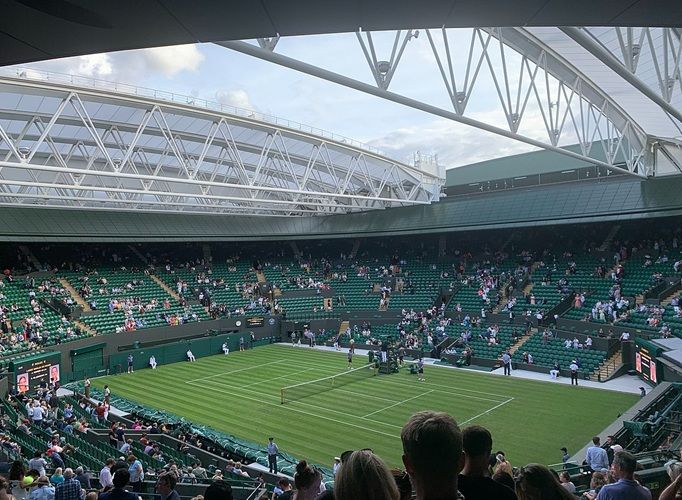

A final worthy of Centre Court
The championship match brought together two of the most consistent players of the season.
Sinner entered the final as the world No. 1 and defending champion, while Zverev arrived with renewed confidence after capturing the first Grand Slam title of his career at Roland Garros only weeks earlier.
The matchup represented more than a battle for a major title. It was also a meeting between two players who have shaped the ATP season, both arriving in London with realistic ambitions of finishing the year at the top of the rankings.
As expected, the final was defined by fine margins.
Zverev’s serve allowed him to remain competitive throughout the contest, while his backhand repeatedly forced Sinner into difficult positions from the baseline. The German demonstrated once again why many analysts consider him one of the most complete players in the game when performing at his best.
Yet whenever the momentum appeared to shift, Sinner responded.
That has become one of the defining characteristics of his game. Beyond the power, movement and technical improvements, the Italian now possesses the composure of a multiple Grand Slam champion.
The biggest moments no longer overwhelm him. Instead, they appear to elevate his level.
Whether facing break points, navigating pressure-filled service games or closing crucial sets, Sinner consistently produced his best tennis when the stakes were highest.
Over the course of the final, that difference proved decisive.
Why Sinner was the best player at Wimbledon
Champions are remembered for lifting trophies, but tournaments are often won long before the final.
Sinner’s success at Wimbledon was the result of two weeks of consistently elite tennis.
From the opening rounds onward, he looked comfortable on the grass. His serve provided free points, his return game remained among the most effective in the world and his ability to dictate rallies with both wings repeatedly placed opponents under pressure.
Perhaps the most impressive aspect of his fortnight was the completeness of his game.
Grass courts have traditionally rewarded specialists, players capable of shortening points and using the serve as a dominant weapon. Modern Wimbledon remains fast, but it also rewards versatility.
Sinner possesses both.
He can win points quickly behind his serve, but he is equally comfortable constructing rallies from the baseline. He can defend when necessary and attack when opportunities emerge. Few players currently combine those qualities as effectively.
That balance allowed him to navigate different styles throughout the tournament and arrive at the final physically fresh and tactically prepared.
By the end of the fortnight, there was little doubt that the best player in the draw had lifted the trophy.
A season that is becoming historic
The Wimbledon title is not an isolated achievement.
It is the latest milestone in what has already become one of the most impressive seasons of Sinner’s career.
The Italian entered 2026 as the world’s leading player and has spent the season reinforcing that status.
Major titles, Masters 1000 victories and long winning streaks have transformed him from a Grand Slam champion into the central figure of the ATP Tour.
What makes his rise particularly impressive is the consistency.
Many players experience brief periods of dominance. Sustaining that level over an entire season is far more difficult.
Sinner has managed exactly that.
Regardless of surface, location or opponent, he has repeatedly positioned himself deep into the biggest tournaments. Hard courts, clay and now grass have all produced significant results.
For years, tennis fans debated who would eventually take control of the sport after the era dominated by Federer, Nadal and Djokovic.
That discussion is increasingly beginning to sound outdated.
The answer appears to be standing at the top of the rankings.
The evolution of a champion
One of the most fascinating aspects of Sinner’s development has been the way his game continues to evolve.
When he first emerged on the ATP Tour, his ball-striking immediately attracted attention. The power and timing from both wings were exceptional.
Yet there were questions.
Could he improve his serve enough to dominate major finals? Could he become physically strong enough to withstand the demands of best-of-five-set tennis? Could he consistently handle the pressure of being the player expected to win?
Over the last two seasons, those questions have gradually disappeared.
His serve has become one of the most reliable weapons in men’s tennis. His movement has improved dramatically. His tactical understanding continues to mature.
Most importantly, he now looks entirely comfortable carrying the expectations that come with being world No. 1.
The version of Sinner that won Wimbledon looks significantly more complete than the talented teenager who first announced himself to the tennis world.
That evolution may ultimately prove more important than any individual title.
Zverev leaves London with reasons for optimism
Defeat in a Grand Slam final is always painful.
However, Wimbledon should ultimately reinforce Alexander Zverev’s belief that he belongs among the leading contenders in men’s tennis.
For much of his career, the German carried the reputation of a player capable of winning major tournaments but unable to complete the final step.
His Roland Garros triumph changed that narrative. His Wimbledon run strengthened it further.
Throughout the fortnight, Zverev demonstrated many of the qualities that have made him one of the most dangerous players on the ATP Tour: a powerful serve, elite backhand, improved court positioning and growing confidence under pressure.
Against most opponents, that level would have been enough. The problem for Zverev was that he faced the player currently setting the standard for the sport.
Despite the disappointment of finishing runner-up, there are numerous positives for the German to take from London. He reached another major final. He proved that his Roland Garros success was not a one-off achievement. And he remains firmly positioned among the leading contenders for the biggest tournaments still to come this season.
The US Open now looms as a significant opportunity.
If Wimbledon demonstrated anything, it is that Zverev is no longer chasing the elite.
He is part of it.
The rivalry that could define the next era
Every great period in tennis history has been shaped by rivalries.
Federer and Nadal transformed the sport. Djokovic later elevated those battles to even greater heights.
The ATP Tour is still searching for the matchup that will define the post-Big Three era. Nowadays we have Sinner and Alcaraz, could Zverev be the “Andy Murray” of the new era?
Sinner and Zverev may not yet possess the history of those legendary rivalries, but Wimbledon provided another reminder that their meetings are becoming increasingly significant.
Both players are now competing for the sport’s biggest prizes. Both possess games capable of succeeding on every surface. Both have legitimate ambitions of finishing the season at No. 1.
As a result, every encounter carries greater importance.
The final at Wimbledon may ultimately be remembered not only as another major title for Sinner, but also as another chapter in a rivalry that could shape the coming years of men’s tennis.
And based on what Centre Court witnessed, there will almost certainly be more chapters still to come.
Djokovic proves he remains a contender
While the trophy ultimately went to Sinner, Wimbledon 2026 also provided another reminder of Novak Djokovic’s extraordinary longevity.
The Serbian once again reached the latter stages of the tournament, demonstrating why he remains one of the most dangerous players in men’s tennis despite entering the final years of his career.
Few players in history have understood grass-court tennis as completely as Djokovic. His movement, returning ability and tactical intelligence continue to make him a nightmare opponent over five sets, particularly at Wimbledon.
Although he fell short of another final appearance, his performance throughout the fortnight showed that he remains capable of competing with the very best players in the world.
Every passing season raises questions about how much longer Djokovic can remain among the elite. Every major tournament seems to provide the same answer. For now, he is still there.
And until proven otherwise, he remains a legitimate contender whenever a Grand Slam begins.
Arthur Fery becomes the story of the fortnight
Every Wimbledon produces an unexpected storyline.
In 2026, that story belonged to Arthur Fery.
The British player arrived at the All England Club with limited expectations but quickly became one of the tournament’s most talked-about names. Backed by enthusiastic home support, Fery produced a series of impressive performances that carried him deep into the draw and transformed him into one of the surprises of the season.
What made his run particularly remarkable was not only the results themselves but the quality of tennis he displayed.
Comfortable on grass and fearless against higher-ranked opponents, Fery embraced the occasion rather than shrinking from it.
For British tennis, his breakthrough represented one of the most encouraging developments of the tournament.
Whether this run proves to be the beginning of a long-term rise remains to be seen, but Wimbledon 2026 ensured that Arthur Fery’s name is now firmly on the radar of tennis fans around the world.
Cobolli continues his rise
Among the players who left London with their reputation enhanced, Flavio Cobolli deserves special mention.
The Italian entered Wimbledon following the best period of his career and once again demonstrated why he is increasingly viewed as one of the leading figures of the ATP Tour’s next generation.
Grass was never expected to be his most natural surface, yet Cobolli adapted impressively and produced another strong Grand Slam campaign.
His willingness to compete aggressively, combined with growing confidence at the highest level, allowed him to challenge some of the sport’s biggest names.
Perhaps most importantly, he confirmed that his breakthrough season is no longer a surprise.
Cobolli is becoming a consistent presence in the latter stages of major tournaments, and that is often the clearest sign that a player is ready to establish himself among the elite.
Other notable performers
Beyond the headline names, Wimbledon once again highlighted the depth of talent currently present on the ATP Tour.
Several players produced performances that will provide confidence heading into the second half of the season.
Taylor Fritz reinforced his reputation as one of the strongest grass-court players in the game, while Jiri Lehecka continued to show why many believe he possesses the tools to become a future Top 10 player.
Across the draw, established contenders and emerging talents combined to produce one of the most competitive editions of Wimbledon in recent years.
The disappointments of Wimbledon 2026
No major tournament is complete without a few unexpected disappointments. Several highly regarded players arrived in London with ambitions of challenging for the title but failed to meet expectations. Some struggled to adapt to the unique demands of grass, while others were hampered by injuries or inconsistent form.
The short grass-court season often leaves little margin for error, and Wimbledon remains one of the most unforgiving tournaments on the calendar. For those who underperformed, the focus now shifts quickly toward the North American hard-court swing and the final Grand Slam of the season.
Fortunately, tennis offers few opportunities to dwell on disappointment. Another major challenge is always around the corner.
The records and milestones of Wimbledon 2026
Every Grand Slam leaves its mark on the history books, and Wimbledon 2026 was no exception.
For Sinner, the title represented another significant addition to an already impressive collection of achievements. Defending a Wimbledon crown is a feat accomplished by only a select group of players in the Open Era (he is the 10th), placing the Italian in elite company. The victory also strengthened his position at the top of the ATP Rankings and further enhanced his growing legacy on multiple surfaces.
For Zverev, reaching another Grand Slam final immediately after winning Roland Garros confirmed his status as one of the leading players of the season.
Djokovic, meanwhile, continued to add to one of the most remarkable records in tennis history by reaching the latter stages of another major tournament.
Collectively, these achievements reinforced the sense that men’s tennis is entering a fascinating transitional period, where established legends and modern champions continue to compete on the biggest stages.
What Wimbledon means for the ATP season
With Wimbledon now complete, attention turns toward the North American hard-court swing.
Historically, this period of the season has played a decisive role in determining year-end rankings and ATP Finals qualification. For Sinner, the situation is clear, he remains the player everyone is chasing. His success in London has extended his advantage over many of his closest rivals and strengthened his position ahead of the US Open Series.
For Zverev, Wimbledon confirmed that he has become one of the most realistic challengers to the world No. 1.
Players such as Djokovic, Fritz, Cobolli and Lehecka also leave London with reasons for optimism as the tour prepares for another demanding stretch of the calendar. The race is far from over. But Wimbledon provided a clearer picture of where the balance of power currently lies.
Looking ahead to the US Open
The final Grand Slam of the season now comes into focus.
The US Open has often produced dramatic twists, unexpected champions and career-defining moments. This year promises to be no different.
Sinner will likely arrive in New York as the favourite, carrying both confidence and momentum from another Wimbledon triumph. Yet the chasing pack remains dangerous.
Zverev has already demonstrated his ability to win majors. Djokovic continues to defy expectations. A new generation led by players such as Cobolli and Lehecka continues to gain experience and belief.
If Wimbledon established the hierarchy of the ATP Tour, the US Open may determine how the story of the 2026 season is ultimately remembered.
Conclusion
Wimbledon 2026 will be remembered as the tournament that further confirmed Jannik Sinner’s status as the leading player in men’s tennis.
The Italian arrived in London carrying the weight of expectation and departed with the trophy, successfully defending his title on the sport’s most prestigious stage.
Along the way, the Championships also highlighted the continued excellence of Djokovic, the emergence of Arthur Fery, the rise of Cobolli and the growing threat posed by Zverev.
Most importantly, Wimbledon offered another reminder of why it remains the most iconic event in tennis. Tradition, pressure, history and excellence collided once again on the grass courts of the All England Club. And when the final ball was struck, it was Sinner who stood alone at the top.