Wimbledon: history, grass courts and the traditions behind tennis’ most iconic tournament
Wimbledon is more than a Grand Slam tournament.
Played every summer in London, it is the oldest event in tennis and the most prestigious title many players dream of winning. As the only Grand Slam still contested on grass courts, Wimbledon occupies a unique place in the sport, combining centuries-old traditions with the highest level of modern competition.
From its historic courts to its distinctive playing conditions, Wimbledon remains one of the most recognizable sporting events in the world and a defining chapter in every tennis season.

The history of Wimbledon
The Championships were first held in 1877, making Wimbledon the oldest tennis tournament still in existence.
Organized by the All England Lawn Tennis and Croquet Club, the event played a fundamental role in shaping the modern game. Many of the rules and traditions that continue to influence tennis today were established during Wimbledon’s early decades.
A major turning point arrived in 1968 with the beginning of the Open Era, when professional players were allowed to compete alongside amateurs. Wimbledon quickly evolved into a truly global sporting event while preserving the traditions that had defined it for nearly a century.
Today, winning Wimbledon remains one of the greatest achievements in professional tennis.
Where Wimbledon is played
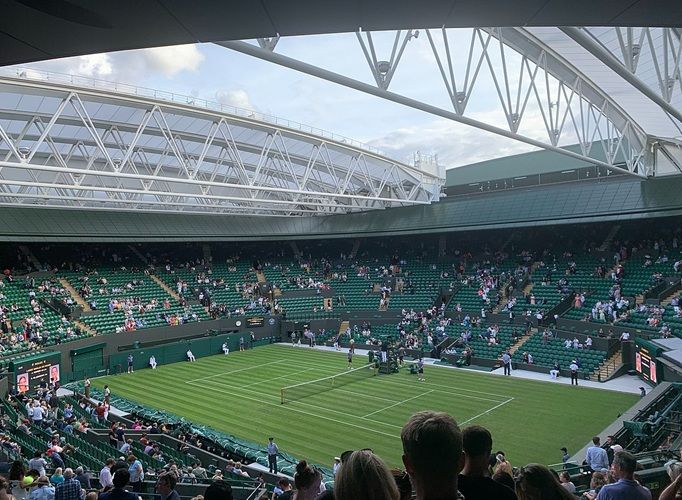
Wimbledon takes place at the All England Lawn Tennis and Croquet Club in southwest London, England.
The venue is home to some of the most famous courts in tennis:
- Centre Court;
- No. 1 Court;
- No. 2 Court.
Centre Court is the symbolic heart of the tournament and one of the most iconic sporting arenas in the world. The addition of a retractable roof in 2009 ensured that play could continue despite the unpredictable British weather while preserving the atmosphere that makes Wimbledon unique.
Every year, these courts become the stage for some of the most memorable moments in tennis history.
Grass courts and Wimbledon’s unique challenge
What distinguishes Wimbledon from every other Grand Slam is its surface.
Grass courts produce faster conditions, lower ball bounces and shorter rallies than clay or hard courts. As a result, players must adapt their tactics and movement more quickly than at any other major tournament.
Success on grass is often built around:
- strong serving;
- aggressive court positioning;
- quick reactions;
- effective net play;
- the ability to adapt to changing court conditions.
Unlike other surfaces, grass gradually wears down during the tournament. By the second week, the courts often play differently than they did during the opening rounds, creating an additional challenge for competitors.
Because of these characteristics, Wimbledon is widely considered the most specialized Grand Slam in tennis.
Tournament format and structure
Like the other major tournaments, Wimbledon follows the traditional Grand Slam format over two weeks of competition.
Singles man competition:
- 128 players in the main draw;
- Best-of-five sets for men;
Seven rounds, from the first round to the final.
Other events:
- Women’s singles (best-of-three sets);
- Men’s and women’s doubles;
- Mixed doubles;
Junior and wheelchair events.
Although the fast surface often produces shorter rallies, Wimbledon matches can still become physically demanding, particularly during the later rounds when the pressure of competing for a Grand Slam title intensifies.
Records and legendary champions
No tournament is more closely associated with tennis greatness than Wimbledon.
Most men’s singles records (Open Era, after 1968):
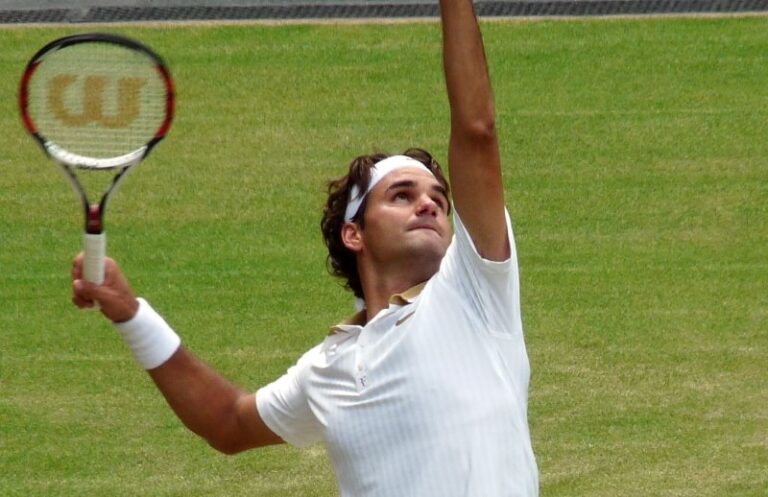
- Most titles: Roger Federer (8 Wimbledon titles);
- Most consecutive titles: Roger Federer (5 titles from 2003 to 2007);
Most finals appearances: Roger Federer (12 Wimbledon finals).
Federer’s elegance and dominance on grass helped define an era and established him as one of the greatest grass-court players in tennis history.
Other notable champions:
- Novak Djokovic (7 Wimbledon titles in 10 finals);
- Pete Sampras (7 Wimbledon titles in 7 finals);
- Björn Borg (5 Wimbledon titles in 6 finals).
Across generations, Wimbledon has consistently rewarded players capable of combining technical excellence with composure under pressure.

Why Wimbledon matters so much
Every Grand Slam carries prestige, but Wimbledon occupies a unique position within the sport.
For many players, it represents the most coveted title in tennis. Its history, traditions and global visibility give the tournament a significance that extends beyond rankings and prize money.
A strong performance at Wimbledon often:
- confirms a player’s versatility across surfaces;
- enhances legacy and reputation;
- delivers valuable ATP ranking points;
- shapes the narrative of the season.
For champions, winning Wimbledon frequently becomes the defining achievement of their careers.
ATP ranking points at Wimbledon
As a Grand Slam event, Wimbledon awards the maximum number of ATP ranking points available during the season:
- Winner: 2,000 points;
- Runner-up: 1,200 points;
- Semi-finals: 720 points;
- Quarter-finals: 360 points;
- Round of 16: 180 points;
- Round of 32: 90 points;
- Round of 64: 45 points;
- Round of 128: 10 points;
- Qualifiers: 25 points.
Because of the tournament’s prestige and ranking impact, Wimbledon often plays a crucial role in determining the ATP hierarchy during the second half of the season.
Wimbledon compared to the other Grand Slams
Each major tournament presents a different challenge.
Compared to the Australian Open, Roland Garros and the US Open, Wimbledon remains the fastest Grand Slam and the one most influenced by serving quality and first-strike tennis.
It is generally:
- faster than the Australian Open;
- much faster than Roland Garros;
- more rewarding for aggressive players than the US Open.
The short grass-court season also means that players have limited time to prepare, making adaptation one of the most important factors for success.
Wimbledon in the modern era
Despite embracing technological improvements and modern infrastructure, Wimbledon has remained remarkably faithful to its traditions.
The tournament continues to enforce its famous all-white dress code and maintains a distinctive atmosphere that separates it from every other event on the calendar.
This balance between history and innovation has allowed Wimbledon to remain relevant in modern sport while preserving the qualities that made it legendary.
Conclusion on Wimbledon
Wimbledon is more than a Grand Slam tournament.
It is the sport’s most enduring symbol of tradition, excellence and achievement. From its historic grass courts to its legendary champions, every aspect of Wimbledon contributes to its status as one of the greatest events in world sport.
Understanding its history, surface and significance helps explain why lifting the trophy on Centre Court remains one of the ultimate goals in professional tennis.