Roland Garros recap: Zverev breaks through as Cobolli shines and a wide-open tournament crowns a new champion
The 2026 Roland Garros will be remembered as the tournament that broke expectations.
What began as Jannik Sinner’s opportunity to complete one of the most dominant clay-court seasons in recent memory ultimately ended with Alexander Zverev lifting his first Grand Slam trophy. Along the way, Paris delivered surprise runs, breakthrough performances and a changing ATP landscape that felt markedly different from previous years.
When Zverev finally raised the Coupe des Mousquetaires on Court Philippe-Chatrier, it was the culmination of a journey defined as much by disappointment as by talent.
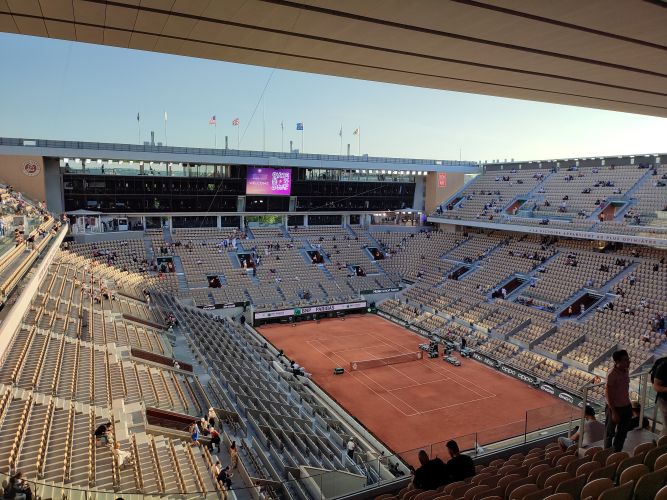

Zverev finally claims his first Grand Slam title
For years, Alexander Zverev had been one of the most accomplished players never to win a major.
Olympic champion, ATP Finals winner and multiple Masters 1000 champion, the German repeatedly placed himself among the elite without managing to cross the final barrier. Roland Garros 2026 changed that narrative.
In a dramatic final lasting more than four hours, Zverev defeated Flavio Cobolli 6-1, 4-6, 6-4, 6-7(5), 6-1 to capture the first Grand Slam title of his career. It was his fourth major final and, after painful defeats at the US Open, Australian Open and Roland Garros itself, his breakthrough moment finally arrived.
The victory also ended a wait of more than three decades for a German men’s Grand Slam champion, the first since Boris Becker won the Australian Open in 1996.
More importantly, it confirmed Zverev’s persistence. Few players have spent as many years knocking on the door of a major title before finally breaking through.
A final that showcased both experience and ambition
The final itself reflected the contrasting stages of the two players’ careers.
Zverev arrived carrying years of experience and the weight of previous missed opportunities. Cobolli entered his first Grand Slam final playing with freedom and confidence after the best tournament of his career.
The German dominated the opening set before Cobolli settled into the match and began dictating more exchanges from the baseline. The Italian forced a fifth set through an impressive fourth-set tiebreak and briefly appeared capable of producing one of the biggest surprises of the season.
Ultimately, experience prevailed.
After more than four hours on court, Zverev raised his level once again in the deciding set, breaking early and pulling away as fatigue and pressure began to affect the Italian.
Cobolli's breakthrough changes the conversation around Italian tennis
Although the title escaped him, Flavio Cobolli leaves Paris as one of the biggest stories of the tournament.
The 24-year-old produced the best Grand Slam result of his career, reaching his first major final and guaranteeing himself a place inside the ATP Top 10 for the first time.
Throughout the fortnight, Cobolli displayed the aggressive baseline game and competitive mentality that have made him one of the fastest-rising players on tour. His victories over higher-ranked opponents confirmed that his run was not simply the product of an open draw.
For Italian tennis, his performance carried additional significance.
With Sinner already established at the top of the sport, Cobolli’s emergence suggests that Italy’s remarkable generation extends beyond a single superstar.
What happened to Sinner?
The biggest turning point of the tournament occurred before championship weekend.
After arriving in Paris as the overwhelming favorite following titles in Monte Carlo, Madrid and Rome, Sinner’s campaign ended prematurely because of injury. His withdrawal removed the dominant player of the clay season from the draw and immediately transformed the tournament’s dynamics.
Before Paris, Sinner had achieved one of the greatest clay-court stretches of the modern era.
He became only the second player in ATP history to win Monte Carlo, Madrid and Rome in the same season, while extending an extraordinary Masters 1000 winning streak.
As a result, Roland Garros never truly received the showdown many expected.
Instead of seeing whether anyone could stop the world No.1 over five sets on clay, the tournament became a battle to seize the opportunity created by his absence.
The other stories of Roland Garros
Several players used the tournament to announce themselves on the biggest stage.
Jakub Mensik continued his rapid rise with another strong Grand Slam campaign, while João Fonseca further strengthened his reputation as one of the sport’s most exciting young talents after eliminating Novak Djokovic earlier in the tournament.
Djokovic’s early exit and Carlos Alcaraz’s absence due to injury contributed to one of the most unpredictable men’s draws in recent years. For the first time in a long time, the latter stages of a Grand Slam felt completely open.
That unpredictability ultimately became one of the defining characteristics of the 2026 edition.
What Roland Garros means for the rest of the season
Paris may prove to be a turning point in the ATP season.
Zverev now enters the grass-court swing carrying the confidence that only a first Grand Slam title can provide. Cobolli leaves with a career-defining result and new expectations. Meanwhile, attention will immediately shift to the health of Sinner and the timetable for his return.
Despite not lifting the trophy, the Italian remains the player who has defined the 2026 season so far.
But Roland Garros reminded everyone of a fundamental truth in tennis: opportunities can appear suddenly, and when they do, someone must be ready to take them.
This year, that player was Alexander Zverev.
Conclusion
The 2026 French Open delivered a new Grand Slam champion, a breakthrough Italian finalist and one of the most unpredictable men’s tournaments of the last decade.
Alexander Zverev finally removed the biggest question mark of his career. Flavio Cobolli established himself among the elite. Jannik Sinner’s absence left fans wondering what might have been.
And as the ATP Tour now turns towards grass courts and Wimbledon, the balance of power feels more fascinating than ever.