Italian Open recap: Sinner triumphs in Rome and continues historic Masters 1000 streak
Jannik Sinner’s extraordinary 2026 season reached another milestone in Rome.
The world No.1 captured the Italian Open title in front of a home crowd at the Foro Italico, extending one of the most dominant Masters 1000 runs of the modern era and further cementing his position at the top of men’s tennis.
In a tournament shaped by expectation, physical battles and growing pressure, Sinner once again delivered with composure and authority, adding Rome to a remarkable sequence that has already transformed the narrative of the ATP season.
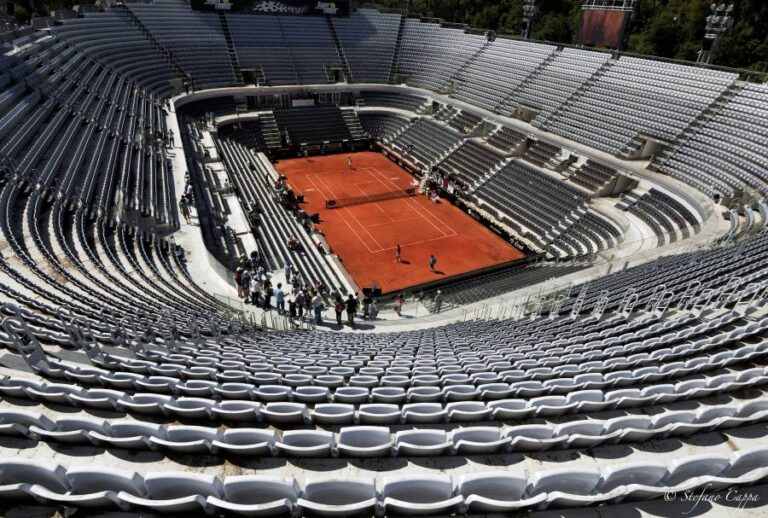

Sinner conquers Rome and strengthens his grip on the ATP Tour
Winning the Italian Open carried significance beyond another trophy.
For Sinner, Rome represented the emotional and symbolic center of his clay season: a home tournament, overwhelming expectations and the pressure of arriving as the clear favorite after titles in Indian Wells, Miami, Monte Carlo and Madrid.
Rather than slowing him down, that pressure appeared to sharpen his level.
Throughout the tournament, the Italian showed the complete evolution of his game on clay. His baseline intensity remained unmatched, but Rome also highlighted the patience and tactical maturity he has developed over the last two seasons. Longer rallies, defensive resilience and intelligent point construction became as important as his trademark power from the ground.
In the final, Sinner once again controlled the key moments with remarkable calm, absorbing pressure before progressively taking command of the match through consistency and depth from the baseline.
The title marks another defining achievement in what is becoming one of the strongest stretches ever seen at Masters 1000 level.
Records continue to fall
With victory in Rome, Sinner added another chapter to a season increasingly driven by records and milestones.
The Italian has now won multiple Masters 1000 tournaments in consecutive fashion, extending a winning streak at this level that continues to grow with every event. His dominance across Paris, Indian Wells, Miami, Monte Carlo, Madrid and now Rome has established a level of consistency rarely seen in the modern ATP Tour. No one in the past has win 6 consecutives Master 1000.
Jannik also broke Djokovic’s record of 31 consecutive matches win during Master 1000 tournaments, the Italian arrives to 34 victories.
Perhaps most impressively, Sinner has now completed victories across every Masters 1000 environment, from hard courts to traditional clay conditions, reinforcing the idea that his success is no longer tied to a single surface or style of play.
At just 24 years old, the scale of his achievements is already placing him alongside some of the defining names of the previous generation. Only Novak Djokovic has win all Masters 1000 in his career, but he reached this fantastic result when he was 31 years old.
The final and the tournament’s defining moments
The final itself reflected the broader story of the tournament: Sinner operating with greater clarity and consistency than the rest of the field.
His opponent arrived in strong form after navigating a physically demanding draw, but over the course of the match the difference in control and execution became increasingly evident. While the challenger produced periods of aggressive tennis and attempted to disrupt the rhythm of the world No.1, Sinner consistently responded under pressure and gradually imposed the pace of the encounter.
Rome, however, was not defined only by the champion.
Alexander Zverev once again confirmed his reliability at Masters 1000 level with another deep run, continuing to position himself among the most consistent contenders on clay. Casper Ruud also showed encouraging form, while Stefanos Tsitsipas produced some of his strongest tennis of the season before falling short in the decisive stages.
At the same time, the absence of Carlos Alcaraz due to injury remained one of the tournament’s dominant talking points, significantly reshaping the balance of the draw and reinforcing the sense that the ATP hierarchy currently revolves around Sinner.
A different atmosphere at the Foro Italico
This year’s Italian Open carried a noticeably different atmosphere.
The energy surrounding Sinner transformed the tournament into something larger than a traditional Masters 1000 event. Every match involving the Italian felt central to the narrative of the week, with crowds at the Foro Italico responding to the growing sense that they were witnessing a historic moment for Italian tennis.
The pressure of performing at home often becomes a burden for players, yet Sinner handled it with the same composure that has defined his entire season. If anything, Rome further demonstrated how comfortable he has become carrying the expectations of the sport.
What Rome means ahead of Roland Garros
The Italian Open has long been considered the clearest indicator ahead of Roland Garros, and this year’s edition reinforced that perception.
The slower conditions, physical rallies and tactical demands of Rome closely mirror the challenge awaiting players in Paris. In that context, Sinner’s victory carries enormous significance.
He now arrives at Roland Garros not simply as one of the favorites, but as the player setting the standard across the entire ATP Tour.
Conclusion
Rome was expected to clarify the balance of power before Roland Garros. Instead, it reinforced an increasingly obvious reality.
Jannik Sinner is no longer simply leading the ATP Tour, he is defining it.
With another Masters 1000 title, more records falling and his dominance extending across every surface, the Italian leaves Rome carrying not only momentum, but the growing sense that the sport has entered a new era centered around him.