Monte Carlo Masters: history, clay court legends and tournament guide
Few tournaments on the ATP Tour combine elegance, history, and top-level tennis like the Monte Carlo Masters. Nestled along the French Riviera, this Masters 1000 event has long been a cornerstone of the clay season, providing a unique challenge for players as they transition from hard courts to the slow, punishing red surface.
From legendary victories to epic rivalries, Monte Carlo has a reputation for producing drama, memorable matches, and a glimpse of who might dominate the clay swing heading toward Roland Garros.

A historic stage for clay court tennis
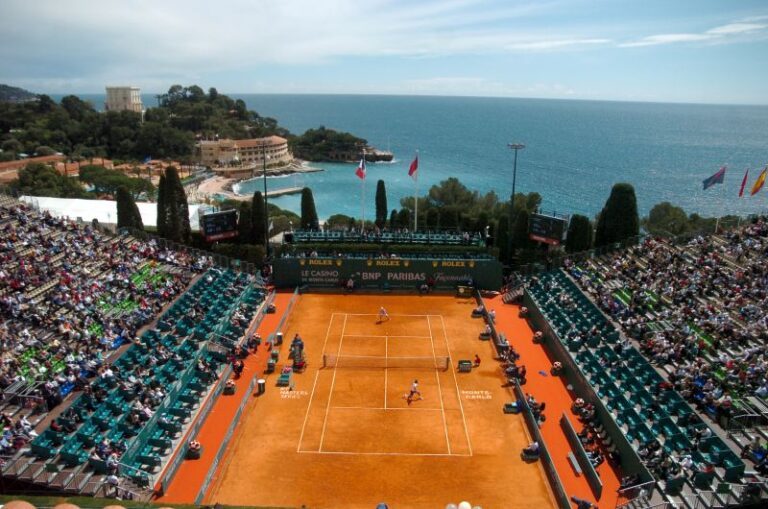
The Monte Carlo Country Club, born in 1896, has hosted some of the sport’s greatest names. Rafael Nadal’s unparalleled success on clay is perhaps the most famous story, but the tournament’s history is dotted with triumphs from Novak Djokovic, Roger Federer, and Mats Wilander. Its scenic terraces overlooking the Mediterranean make it one of tennis’s most visually stunning venues, blending sport with spectacle in a way few tournaments can.
The combination of high-level competition and picturesque surroundings contributes to Monte Carlo’s enduring prestige. It’s not just a tournament; it’s an experience players and fans remember.
The tournament format and ranking stakes
Monte Carlo is a single-elimination event featuring 56 singles players and 24 doubles teams. Top seeds enter in the second round, giving them a strategic advantage while maintaining competitiveness throughout the draw.
Ranking points are crucial:
- Winner: 1,000 points;
- Runner-up: 650 points;
- Semi-finals: 400 points;
- Quarter-finals: 200 points;
- Round of 16: 100 points;
- Round of 32: 50 points;
- Round of 64: 10 points;
- Qualifiers: 30 points.
While the event is technically non-mandatory for top 30 players, it consistently attracts the elite, underscoring its importance in the clay season.
What makes Monte Carlo unique
Monte Carlo tests more than skill; it demands adaptability and endurance. Clay courts slow the game, reward patience, and favor heavy topspin. Matches often turn into physical and mental battles, with long rallies that highlight a player’s tactical intelligence and fitness.
For players, the tournament is both a proving ground and a preparation for the French Open. Momentum gained here often carries through the rest of the clay season, influencing performances in Madrid, Rome, and Paris.
Legends, records, and unforgettable moments
The Monte Carlo Masters is synonymous with records. Rafael Nadal’s unprecedented streaks, epic finals, and dramatic upsets are part of the tournament’s folklore. But the event has also been a platform for emerging talents to announce themselves, showcasing the next generation of clay court specialists.
Most men’s singles records (after 1968):
- Most titles: Rafael Nadal (11 titles);
- Most consecutive titles: Rafael Nadal (8 titles from 2005 to 2012);
-
Most finals appearances: Rafael Nadal (12 finals).
Other notable champions (all with 3 titles after 1968):
- Ilie Năstase;
- Björn Borg;
- Thomas Muster;
- Stefanos Tsitsipas.
From youngest champions to marathon matches, Monte Carlo’s story is built on athletic excellence and memorable drama — a narrative that continues to unfold year after year.
Top players on clay and season implications
While the tournament draws the top stars, clay specialists often rise to the occasion. Players like Nadal, Djokovic, and Alcaraz illustrate how adaptability, stamina, and strategy define success. Watching Monte Carlo can provide insights into potential favorites for Roland Garros and the rest of the clay season, offering fans a preview of tactical battles and emerging storylines.
Conclusion
Monte Carlo is more than a Masters 1000 event. It’s a tournament where history, tradition, and elite tennis intersect, providing a stage for clay court excellence. Whether you follow for the competition, the players, or the Mediterranean backdrop, this guide ensures you’re equipped to appreciate every serve, rally, and triumph in one of the ATP Tour’s most iconic tournaments.