Madrid Open recap: Sinner continues dominant season with statement victory on clay
Jannik Sinner’s extraordinary 2026 season added another defining chapter in Madrid.
The Italian captured the Madrid Open title after another commanding week, extending his dominance across surfaces and reinforcing his position as the clear benchmark on the ATP Tour. In a tournament shaped by high expectations, physical setbacks and shifting momentum, Sinner once again emerged as the player capable of handling every challenge.
With victories now piling up at Masters 1000 level, the conversation around the Italian is no longer about potential, but about how far this run can go.
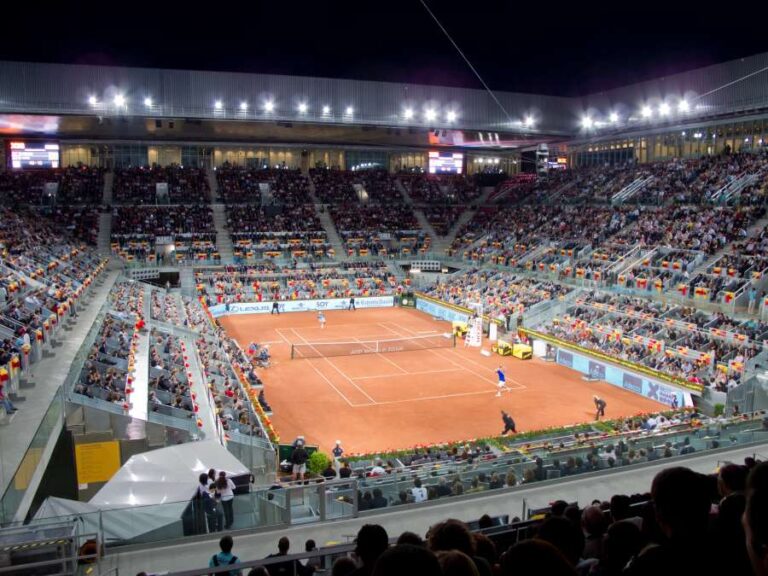

Sinner’s dominance reaches another level
Madrid was supposed to be a different kind of test. The altitude, faster clay conditions and physically demanding draw traditionally create unpredictability, yet Sinner moved through the tournament with the same composure and authority that have defined his season so far.
From the opening rounds, the world No.1 looked in complete control. His baseline intensity remained unmatched, but what stood out most was the adaptability of his game. In conditions that rewarded aggressive tennis, Sinner balanced controlled power with tactical patience, rarely allowing opponents to dictate rallies.
Throughout the week, he consistently dominated key statistical categories:
- one of the highest first-serve percentages in the tournament;
- exceptional break-point conversion;
- minimal unforced errors during pressure moments.
The title marks another Masters 1000 triumph (the 9th in 8 different tournaments) in what is rapidly becoming one of the strongest stretches of the modern ATP era.
Having already completed the Sunshine Double before winning Monte Carlo, Sinner now adds Madrid to a season that increasingly resembles total control of the tour. His winning streak continues to grow, while his consistency across surfaces has separated him from the rest of the field.
With his triumph at the Caja Magica, the Italian became the first tennis player ever to win five consecutive Masters 1000s. A feat not even the Big Three had achieved. Sinner also became the first tennis player to win the first four Masters 1000s of the season (Indian Wells, Miami, Monte Carlo, and Madrid).
A final controlled from start to finish
The final against Alexander Zverev carried the feeling of a genuine heavyweight clash.
Zverev entered the match after a solid tournament and with a game style suited to Madrid’s quicker clay conditions, but Sinner immediately imposed his pace from the baseline. The Italian absorbed pressure early before progressively taking control through cleaner ball-striking and superior consistency in extended exchanges.
While Zverev produced moments of high-level tennis, particularly behind his first serve, he struggled to sustain that level across the entire match. Sinner, by contrast, remained composed in key moments and once again showed the mental clarity that has become a defining feature of his season.
The victory further strengthens his position at the top of the rankings and reinforces the sense that the tour is currently revolving around him.
Zverev solid again despite another missed opportunity
Although he fell short in the final, Alexander Zverev leaves Madrid with encouraging signs.
The German once again proved his reliability at Masters 1000 level, navigating a difficult draw with efficient and disciplined tennis. His serve and backhand remained major weapons throughout the tournament, particularly in Madrid’s fast conditions.
However, the final also highlighted the current gap between a consistent contender and the player dominating the tour. Against Sinner’s relentless pace and precision, Zverev ultimately lacked the sustained aggression needed to shift control of the match.
Alcaraz’s withdrawal raises concerns ahead of Rome
One of the tournament’s major storylines came before the decisive stages, as Carlos Alcaraz was forced to withdraw due to injury.
The Spaniard had entered Madrid under significant pressure following his defeat to Sinner in Monte Carlo and was expected to respond strongly at his home tournament. Instead, physical issues interrupted his campaign and raised concerns ahead of the final stretch of the clay season.
While the full extent of the injury remains unclear, the timing is far from ideal with Rome and Roland Garros approaching quickly. He probably come back in Wimbledon.
Alcaraz’s absence also shifted the balance of the draw, removing the most significant challenger to Sinner’s current dominance.
A tournament that confirmed the ATP hierarchy
Beyond the title itself, Madrid offered another indication of the evolving hierarchy on tour.
Several players produced strong runs and moments of high-quality tennis, but the overall picture remained consistent with the season’s broader trend: Sinner operating at a level above the rest of the field.
Madrid’s unique conditions traditionally create uncertainty, yet this year the tournament reinforced clarity. The Italian’s ability to dominate not only on hard courts but also across different clay environments has transformed him from contender into reference point.
Conclusion
The Madrid Open was expected to reshape the clay season narrative. Instead, it reinforced it.
Jannik Sinner leaves Spain with another major title, an expanding collection of records and the growing sense that the ATP Tour is entering a period defined by his consistency and control.
With Rome and Roland Garros still to come, the challenge for the rest of the field is becoming increasingly clear: finding a way to stop the player currently setting the standard in men’s tennis.