Roland Garros preview: Sinner arrives in Paris chasing history and a career Grand Slam
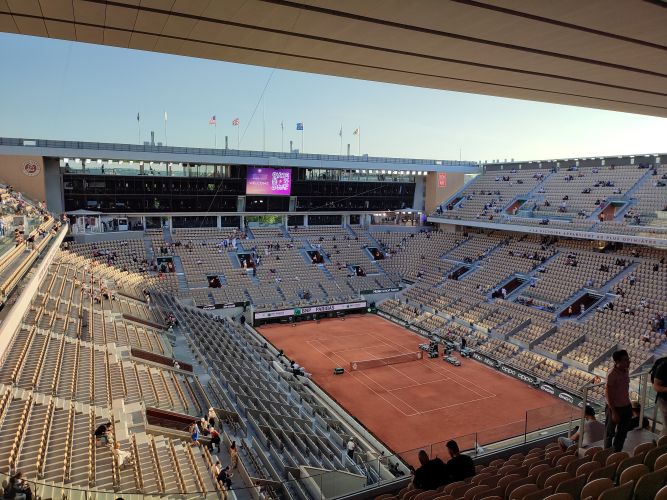
Roland Garros begins with a very different atmosphere surrounding the ATP Tour.
For the first time in years, the French Open arrives without Carlos Alcaraz, the reigning champion and one of the defining clay-court players of the current generation. His withdrawal due to a wrist injury has dramatically reshaped the tournament, leaving Jannik Sinner as the clear favorite entering Paris.
But this Roland Garros is about more than a reshuffled draw. It is about momentum, legacy and the possibility of a defining moment in modern tennis.
After dominating the Masters 1000 season across Indian Wells, Miami, Monte Carlo, Madrid and Rome, Sinner now arrives in Paris chasing the one major title still missing from his collection and the chance to complete a career Grand Slam after completing Career Golden Mastres in Rome.

Sinner enters Paris as the dominant force in tennis
Few players have entered Roland Garros with the level of consistency currently surrounding Jannik Sinner.
The Italian has transformed himself from a hard-court specialist into the most complete player on the ATP Tour, adapting his game to every surface with remarkable speed. His clay season has been particularly impressive: titles in Monte Carlo, Madrid and Rome have confirmed not only technical growth, but also physical and mental evolution.
What stands out most is the variety now present in his game. Sinner still dominates through baseline aggression and clean ball-striking, but on clay he has added greater patience, improved defensive movement and the ability to manage long physical exchanges without losing intensity.
The numbers underline the scale of his dominance:
- multiple consecutive Masters 1000 titles;
- a winning streak extending deep into the clay season;
- victories across every Masters 1000 environment;
- the opportunity to complete a Career Grand Slam in Paris.
With Alcaraz absent, the pressure surrounding Sinner becomes even greater. Roland Garros is no longer simply an opportunity, it feels like his tournament to lose.
Djokovic and experience against the new hierarchy
Despite Sinner’s dominance, Novak Djokovic remains one of the central figures entering Paris.
The Serbian continues to pursue a record-breaking 25th Grand Slam title and arrives at Roland Garros with the experience of having already conquered Paris three times.
While his season has lacked the consistency of previous years, Djokovic’s ability to elevate his level over five sets remains one of the biggest variables in the tournament. On slower clay courts, tactical intelligence and endurance often become as important as physical explosiveness, areas where Djokovic still excels.
The draw has placed him in the opposite half from Sinner, meaning the two cannot meet before a potential final.
That possibility alone shapes much of the anticipation surrounding the tournament.
Zverev searches for a breakthrough moment
Alexander Zverev enters Roland Garros once again positioned just behind the very top favorite.
The German has been one of the most reliable performers of the clay season, producing deep runs at Masters 1000 level and consistently reaching the latter stages of major tournaments. His serve, defensive coverage and physical endurance remain perfectly suited to clay-court tennis.
Yet the central question surrounding Zverev remains unchanged: whether he can finally produce his best tennis in the defining moments of a Grand Slam.
With Alcaraz absent, the path appears more open than in previous seasons, potentially giving Zverev one of his clearest opportunities yet to challenge for the title.
The players who could disrupt the draw
Beyond the leading names, Roland Garros arrives with a deeper and more unpredictable field than many expected.
Casper Ruud remains one of the most natural clay-court specialists on tour and continues to thrive in slower conditions. Stefanos Tsitsipas and Andrey Rublev also retain the ability to produce dangerous runs when confidence builds early in tournaments.
Attention will also fall on younger players capable of shifting momentum quickly across a two-week event. The physical demands of Roland Garros often create opportunities for emerging contenders willing to embrace long matches and tactical battles.
Why Roland Garros remains tennis’ ultimate test
Among all four Grand Slams, Roland Garros remains the most physically and tactically demanding.
The slower clay surface extends rallies naturally, reducing the impact of pure power and forcing players to build points patiently over long exchanges. Winning in Paris requires:
- endurance over two weeks;
- consistency across five-set matches;
- mental resilience under physical stress;
- the ability to adapt tactically from round to round.
These conditions are precisely why success at Roland Garros carries such weight within the sport.
A tournament shaped by a changing era
This year’s French Open also feels symbolic for the ATP Tour itself.
The withdrawals of Alcaraz and several other contenders have accelerated the sense that the balance of power is shifting. Sinner arrives in Paris not simply as world No.1, but as the player defining the rhythm and expectations of the tour.
At the same time, Djokovic continues to represent the final connection to the previous era of dominance, creating the possibility of a generational showdown deep in the tournament.
Conclusion
Roland Garros begins with a clear storyline and enormous stakes.
Jannik Sinner arrives in Paris carrying momentum, records and the pressure of expectation as he chases the only Grand Slam title missing from his career. Novak Djokovic searches for another historic chapter, while a deep field looks for an opportunity to disrupt the growing hierarchy at the top of men’s tennis.
But as the clay season reaches its peak, one reality shapes the tournament more than any other: the road to the French Open title now runs through Jannik Sinner.