Madrid Open preview: Sinner leads the field as altitude reshapes the clay season
The clay season moves into a new phase with the Madrid Open, where conditions shift dramatically and the balance of power is tested once again.
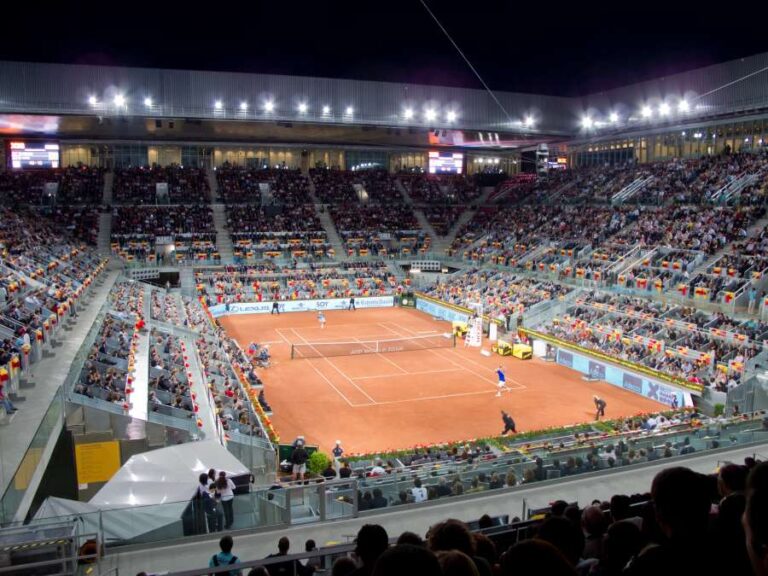
After Jannik Sinner’s statement victory in Monte Carlo, the ATP Tour arrives in the Spanish capital with a clear leader, but also with a tournament that historically disrupts expectations. Played at altitude and under faster conditions, Madrid offers a different kind of clay-court challenge, one that rewards aggression as much as endurance.

Sinner’s momentum meets a new test
Jannik Sinner arrives in Madrid as the player to beat. His victory in Monte Carlo — coupled with the Sunshine Double — has established him as the dominant force of the season and restored him to the top of the rankings.
What makes his current form particularly impressive is its versatility. Once considered primarily a hard-court specialist, Sinner has shown in recent weeks an ability to adapt his game to clay, combining baseline control with increasing patience and tactical awareness.
Madrid, however, presents a different challenge. The altitude speeds up conditions, reducing rally length and rewarding first-strike tennis, an environment that could suit Sinner’s aggressive style, but also one that leaves little margin for error.
If Monte Carlo confirmed his growth, Madrid will test its consistency.
Alcaraz returns to home soil
For Carlos Alcaraz, Madrid represents both opportunity and pressure.
After falling short in the Monte Carlo final and losing the world No.1 ranking, the Spaniard returns to a tournament where he has historically thrived. The faster clay conditions and high bounce suit his explosive game, allowing him to dictate rallies and use his athleticism to full effect.
Playing in front of a home crowd adds another dimension. Alcaraz has often elevated his level in Madrid, but expectations remain high as he looks to respond immediately to Sinner’s rise.
The question is whether he can convert that energy into consistency over the course of the week.
A tournament defined by altitude
Madrid is unlike any other clay event on the calendar.
Situated over 600 meters above sea level, the thinner air allows the ball to travel faster and bounce higher, creating conditions that blur the line between clay and hard courts.
This dynamic has several consequences:
- shorter rallies compared to Rome or Monte Carlo;
- greater importance of serve and first-strike tennis;
- increased unpredictability across the draw.
As a result, Madrid often produces unexpected runs and rewards players who can adapt quickly rather than those relying solely on traditional clay-court patterns.
Contenders and potential disruptors
Beyond Sinner and Alcaraz, the field remains deep and competitive.
Alexander Zverev arrives as one of the most consistent performers at Masters 1000 level. His powerful baseline game and strong serve translate well to Madrid’s conditions, making him a constant threat in the latter stages.
Daniil Medvedev, traditionally less comfortable on clay, could benefit from the faster surface, while players like Andrey Rublev and Casper Ruud bring a mix of clay-court experience and recent form.
The nature of the tournament also opens the door for outsiders. Madrid has a history of rewarding aggressive players and those willing to take risks early in rallies, making it one of the most unpredictable events of the clay season.
From Monte Carlo to Roland Garros: what’s at stake
Madrid represents a crucial step in the build-up to Roland Garros.
While Monte Carlo signals the start of the clay swing, Madrid tests adaptability under unique conditions, and Rome will provide the most traditional preparation. Together, these tournaments shape the narrative heading into Paris.
For top players, success in Madrid is not just about the title, it is about momentum, confidence, and refining a game that must evolve quickly across different clay environments.
Conclusion
The Madrid Open arrives at a pivotal moment in the season.
Jannik Sinner leads the tour with form and confidence, Carlos Alcaraz looks to respond on home soil, and a deep field stands ready to take advantage of the most unpredictable conditions of the clay swing.
In Madrid, more than anywhere else, adaptation is everything, and the outcome is rarely straightforward.